

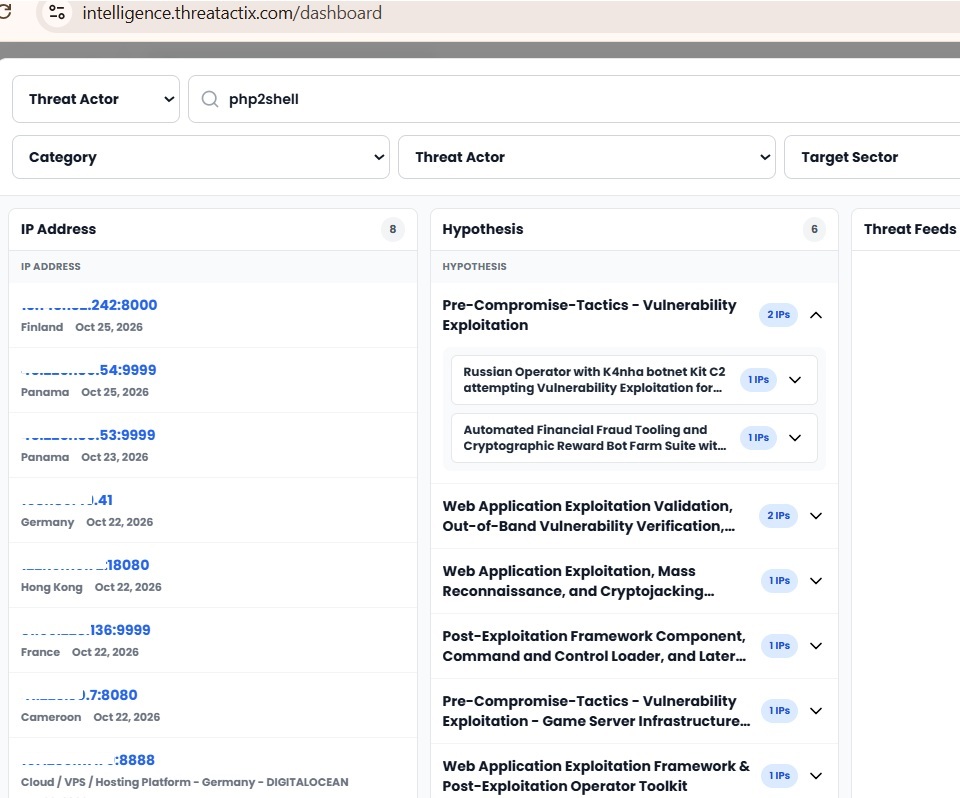
Activity: PHP2Shell exploitation attempts | K4nha-associated tooling | Infrastructure discovery
Our telemetry describes an activity profile associated with a Russian operator and involving K4nha botnet-kit C2, with exploitation attempts across the European region.
The supplied artifact inventory includes K4nha kit archives, geographic datasets, probing utilities, fleet-discovery scripts, and associated output files.
Relevant artifact names
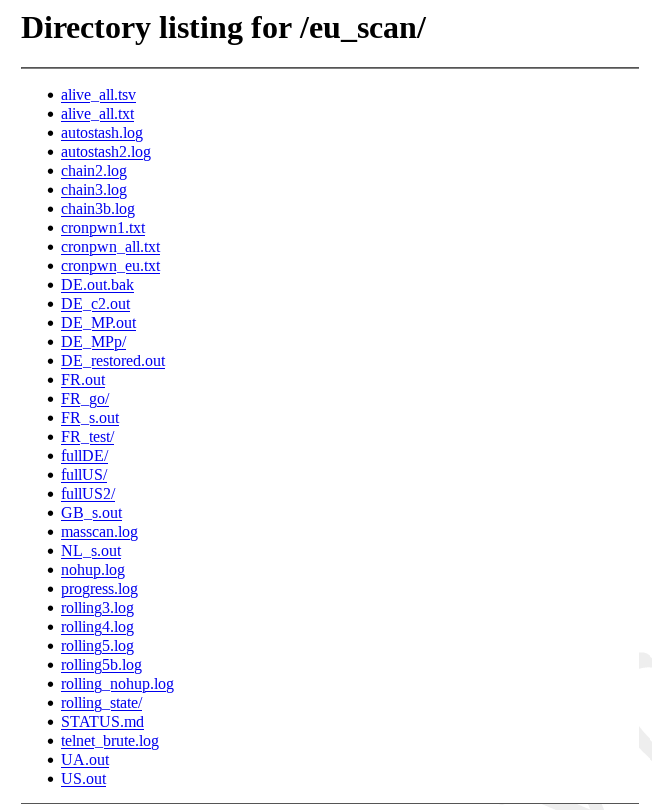
The supplied output inventory includes country-associated labels for Germany (DE), France (FR), the United Kingdom (GB), the Netherlands (NL), Ukraine (UA), and the United States (US). An additional file, cronpwn_eu.txt, refers to a European-region dataset.
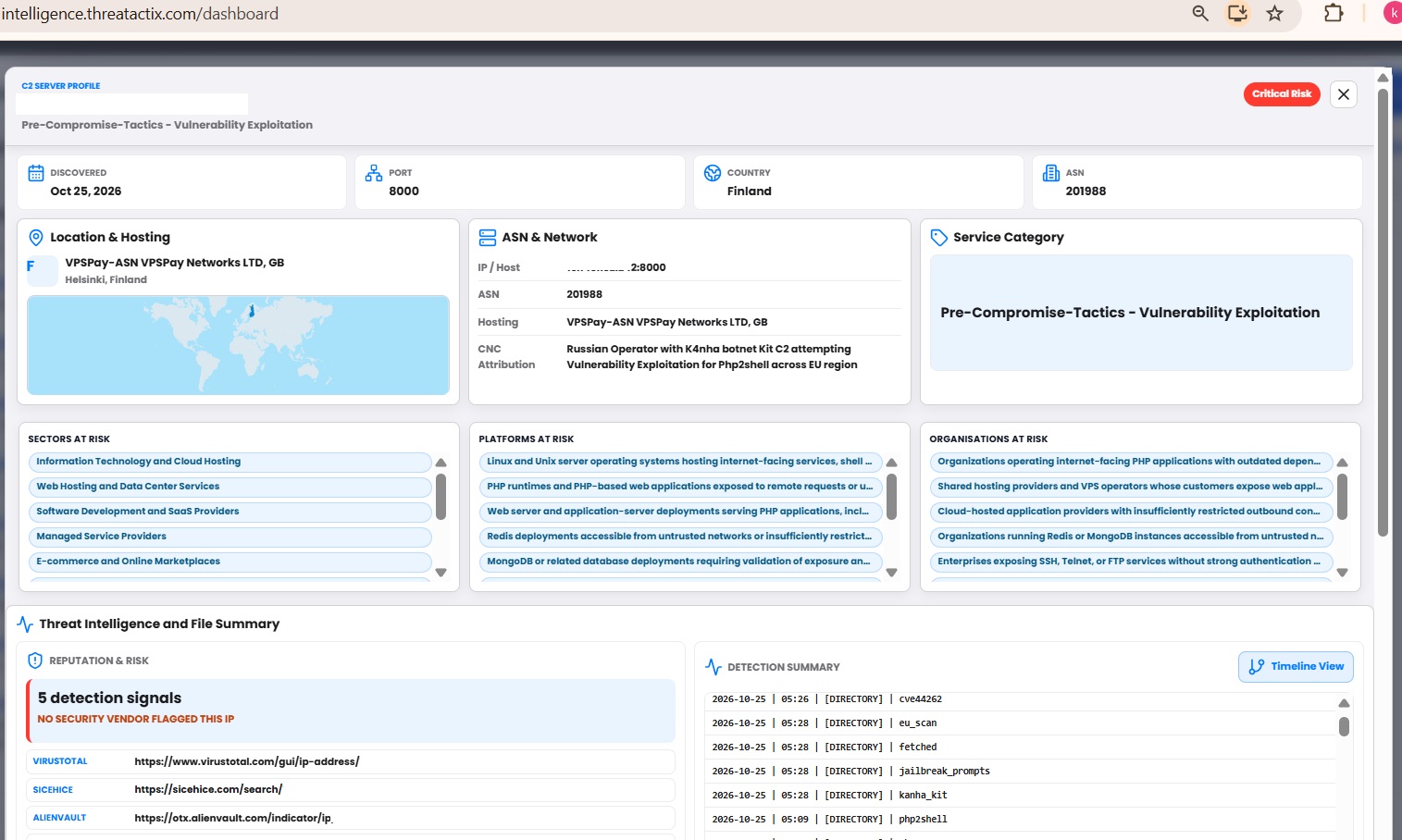
Campaign profile: K4nha Botnet-Kit C2
Hunting priorities
Activity: Account automation | Financial fraud tooling | Web-shell-associated components
The supplied inventory contains reward-task automation, account-creation scripts, proxy-pool files, CAPTCHA-solving utilities, and platform-specific automation components.
The associated activity description identifies cryptocurrency faucet and micro-reward platforms as the target context.
Relevant artifact categories
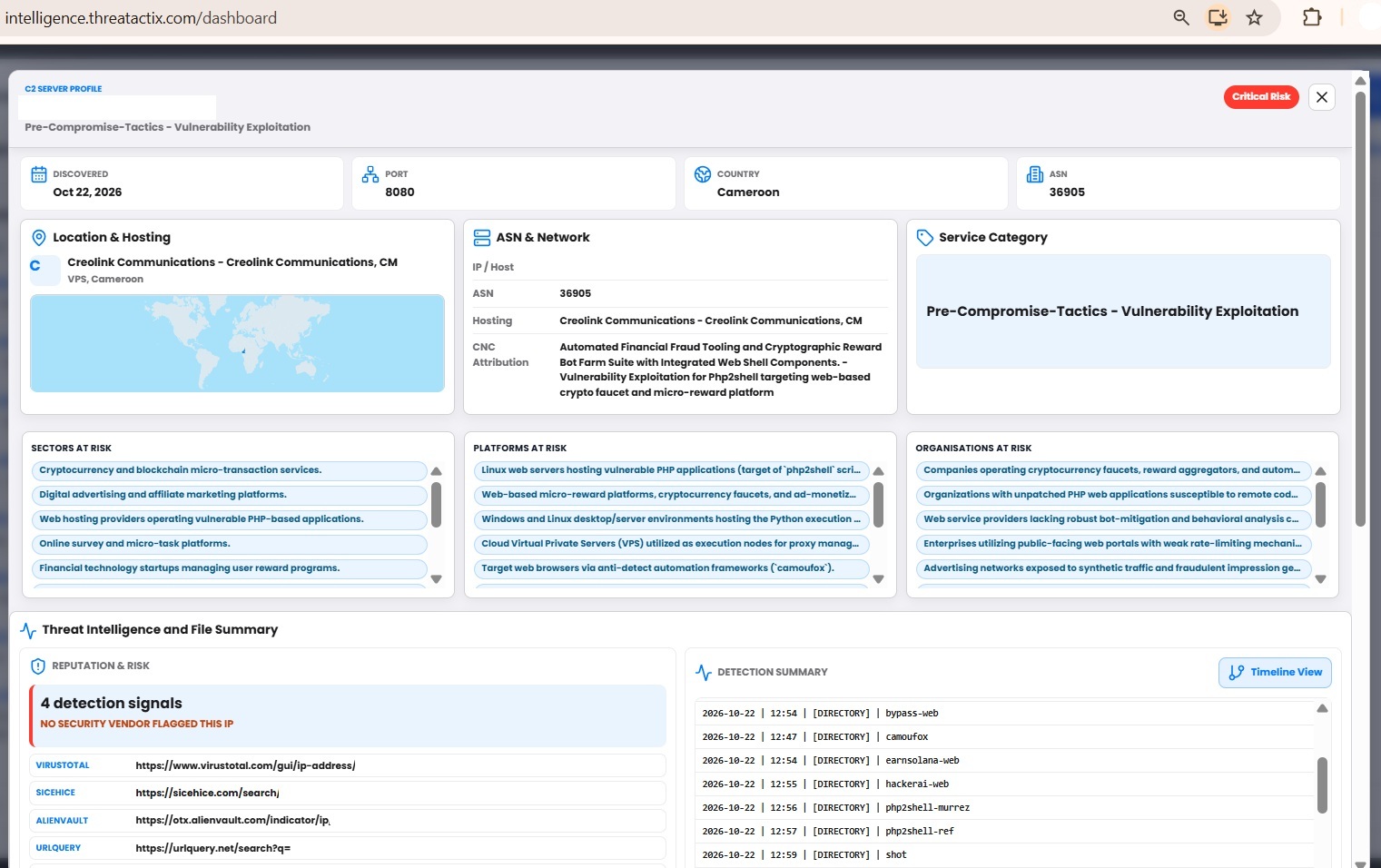
Campaign profile: Financial fraud tooling
Hunting priorities
Activity: PHP2Shell exploitation attempts | Sliver C2 | SMTP authentication and STARTTLS testing
The campaign description associates this activity with a Serbian actor. The supplied inventory contains PHP2Shell-related scanning and validation utilities, out-of-band callback components, Sliver client artifacts, and SMTP testing tools.
Together, these provide several investigative paths to correlate web activity with subsequent host and network behavior.
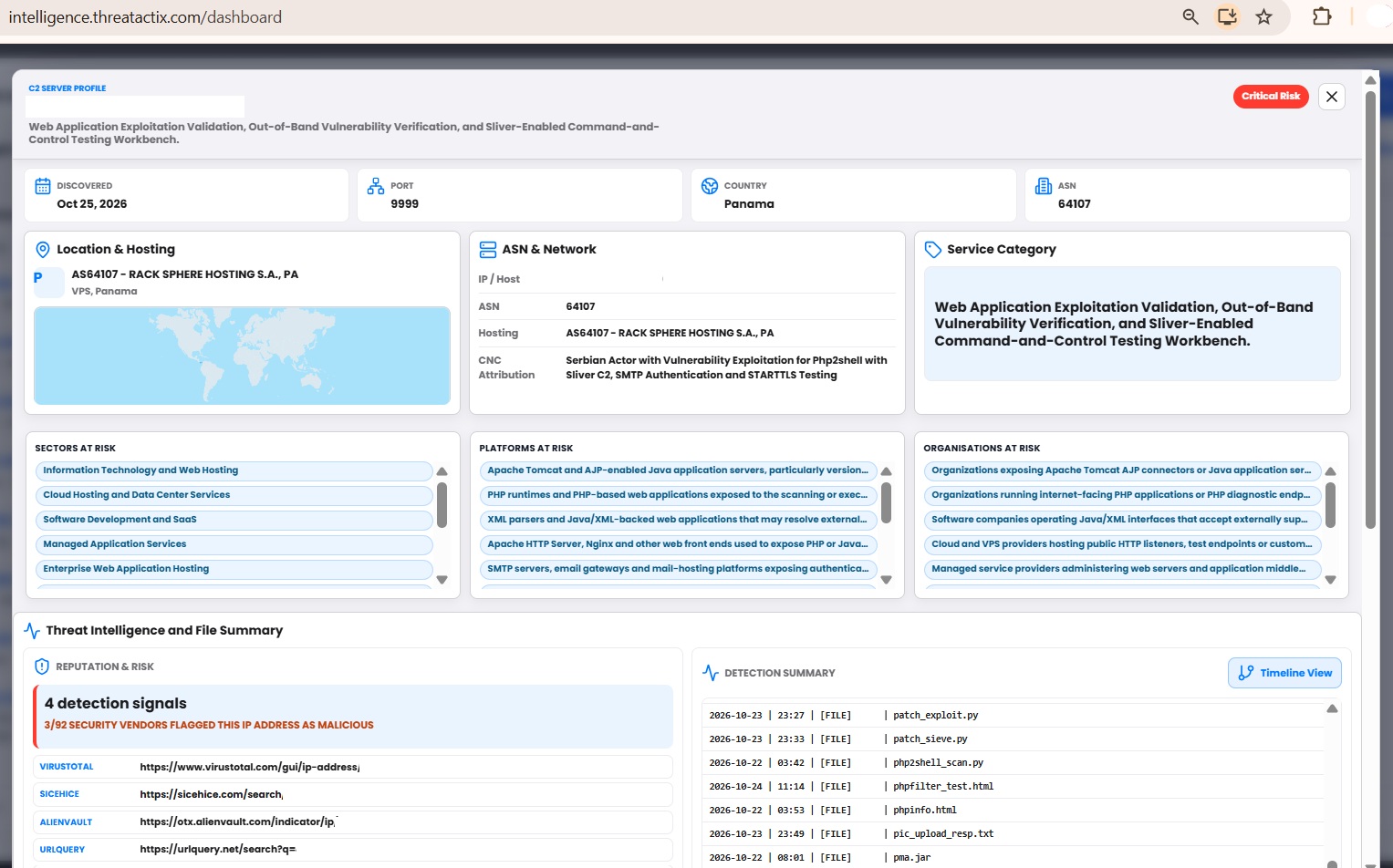
Campaign profile: Open Profile 03 — Sliver C2 and SMTP Activity
Hunting priorities
Activity: Exploitation attempts | Sliver C2 | SMTP and STARTTLS testing
A separate telemetry entry exhibits a pattern similar to Profile 03 but uses a different IP address.
The shared activity categories justify comparative analysis, but the two observations should remain distinct until the evidence supports clustering.
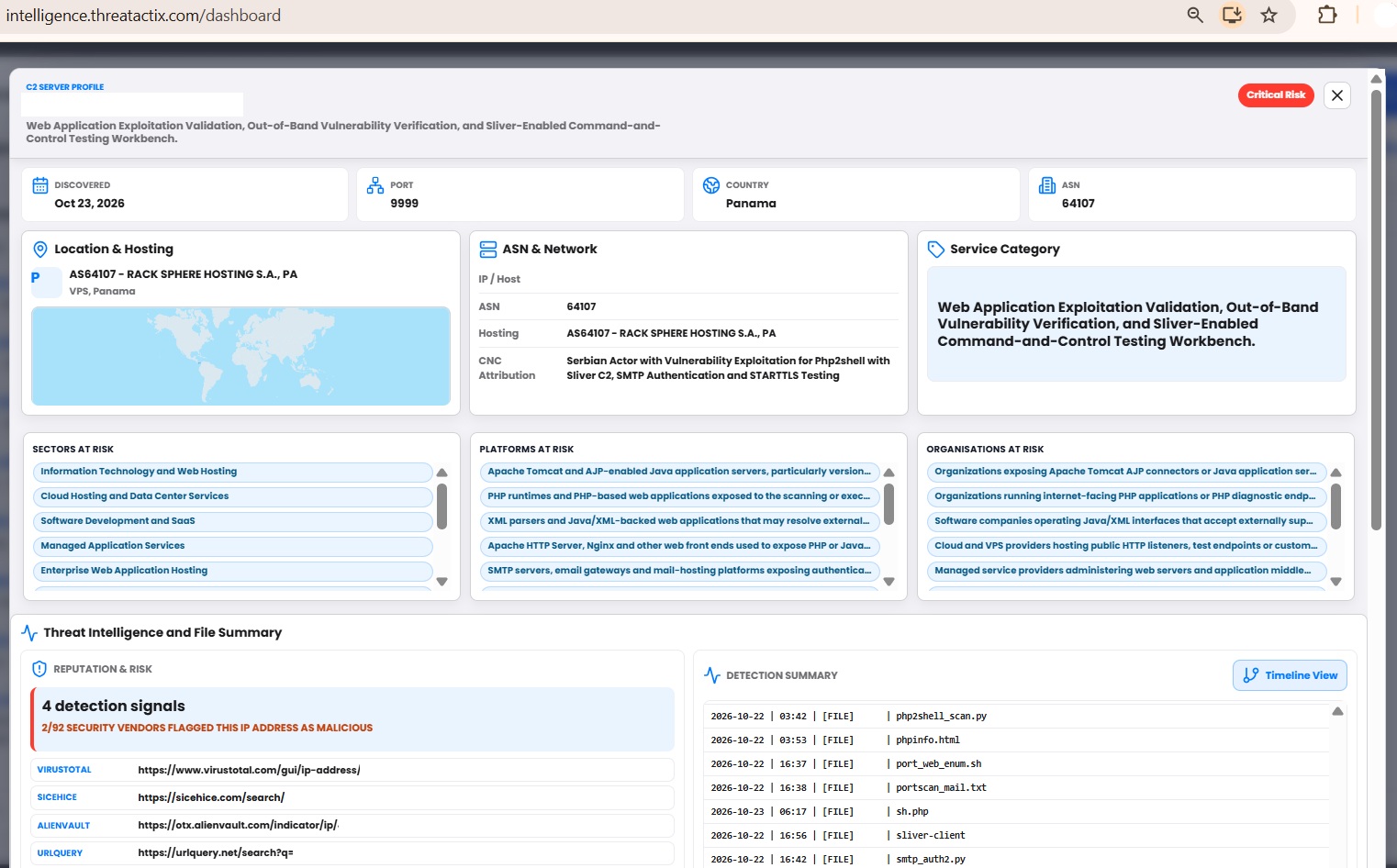
Campaign profile: Open Profile 04 — Separate-IP Sliver Activity
Hunting priorities
Activity: Exploitation tooling | Java archives | Cryptojacking-associated software
The supplied inventory includes PHP2Shell-related workbench directories, Java archive files, application-testing artifacts, and a directory named xmrig-6.26.0, associated by name with XMRig cryptomining software.
These artifacts warrant investigation into potentially unauthorized execution, resource abuse, and application compromise.
Relevant artifact categories:
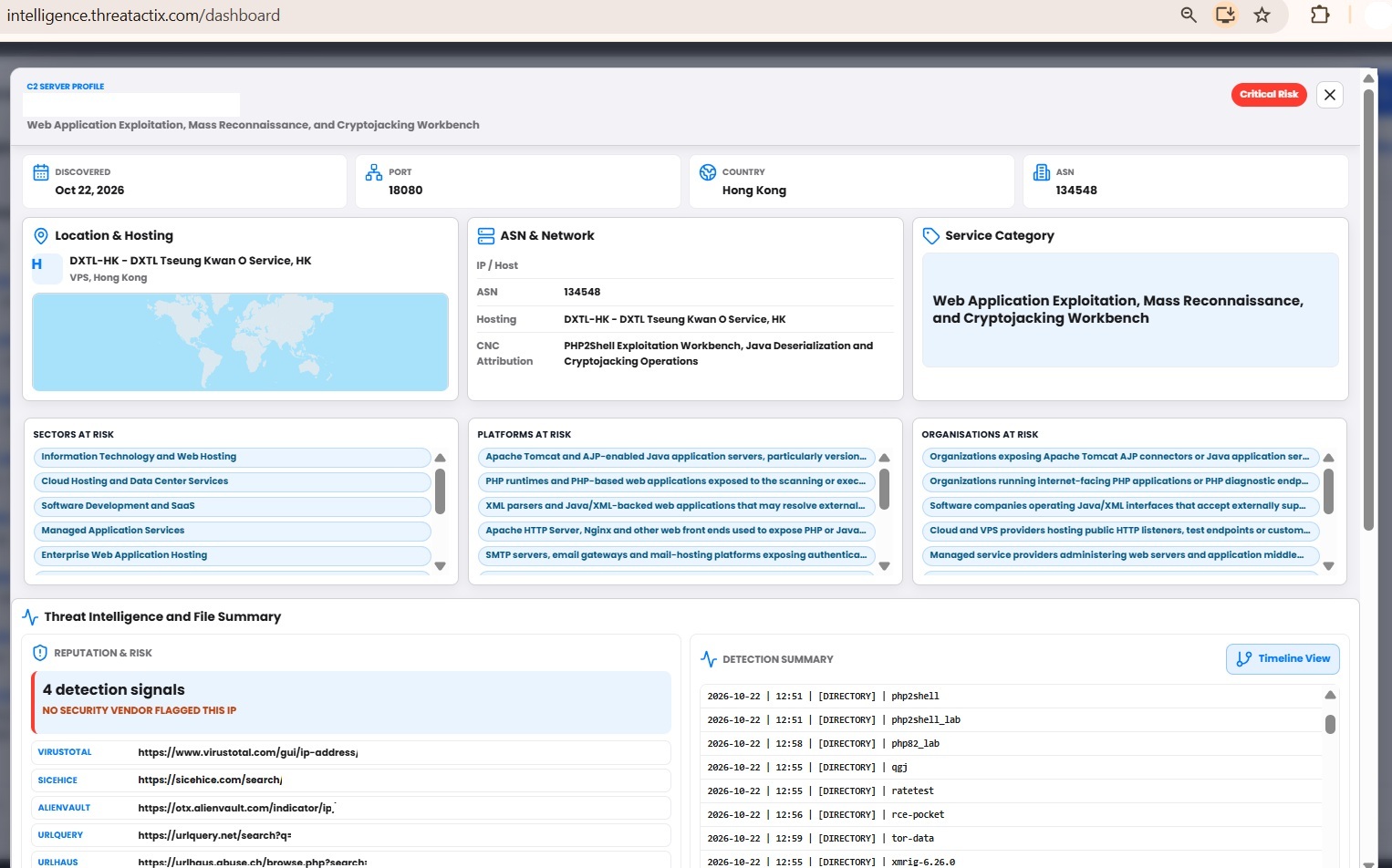
Campaign profile: Open Profile 05 — Exploitation and Cryptojacking Investigation
Hunting priorities
Activity: Security-testing tools | Post-exploitation-associated artifacts | Gaming infrastructure
The supplied inventory contains security-testing and post-exploitation-associated artifacts, including:
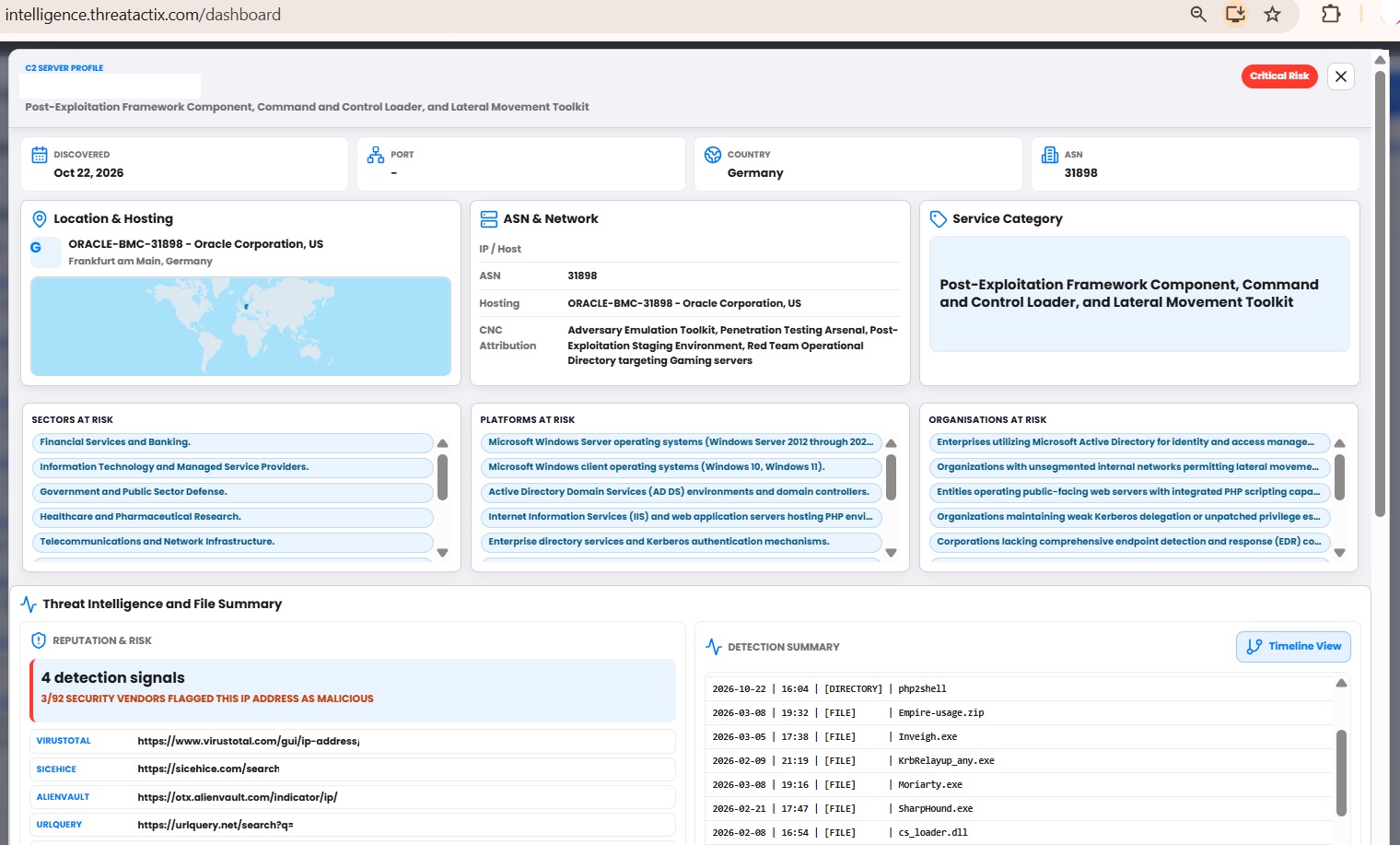
Campaign profile: Open Profile 6 – Adversary Emulation toolkit
Hunting priorities
Activity: PHP2Shell-related exploitation attempts | Hosting infrastructure | Potential unauthorized access
The supplied inventory describes a hosting-related environment associated with high-performance gaming servers, VPS/VDS services, and anti-DDoS infrastructure.
The inventory includes directories labelled CVE-2026-109618, c2, and php2shell, alongside application and server-management artifacts.
These observations provide leads for investigating potentially exposed services, suspicious administrative activity, and unauthorized changes.
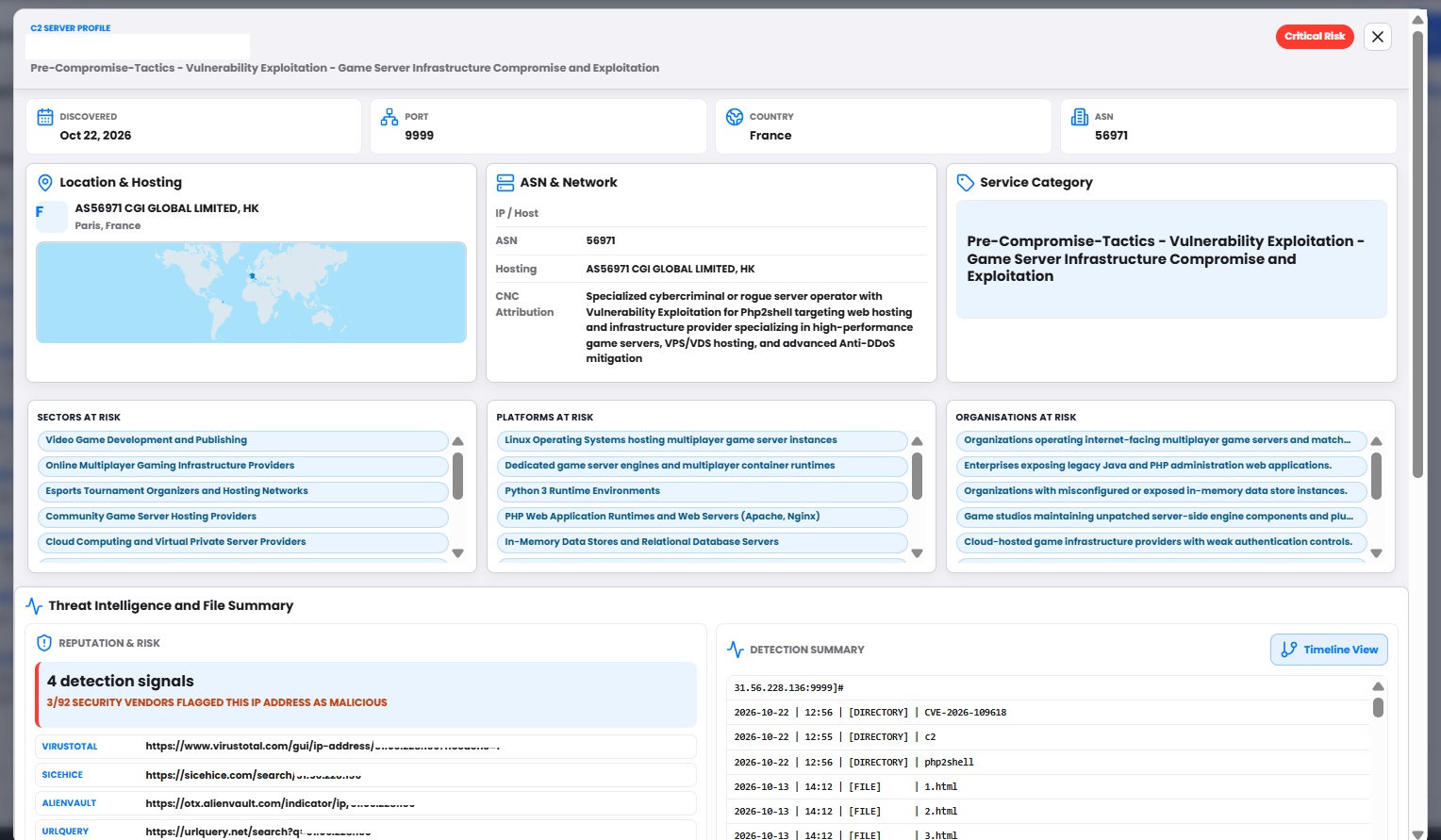
Campaign profile: Open Profile 07 — Hosting and VPS Infrastructure
Hunting priorities
Activity: Custom Python tooling | Exploitation-related activity | C2 investigation
The supplied inventory explicitly describes a custom Python-orchestrated PHP2Shell C2 engine associated with CVE-2026-109618 and CVE-2026-109619.
Relevant filenames include:
The inventory also contains Nuclei-template-related artifacts and versioned supporting materials.
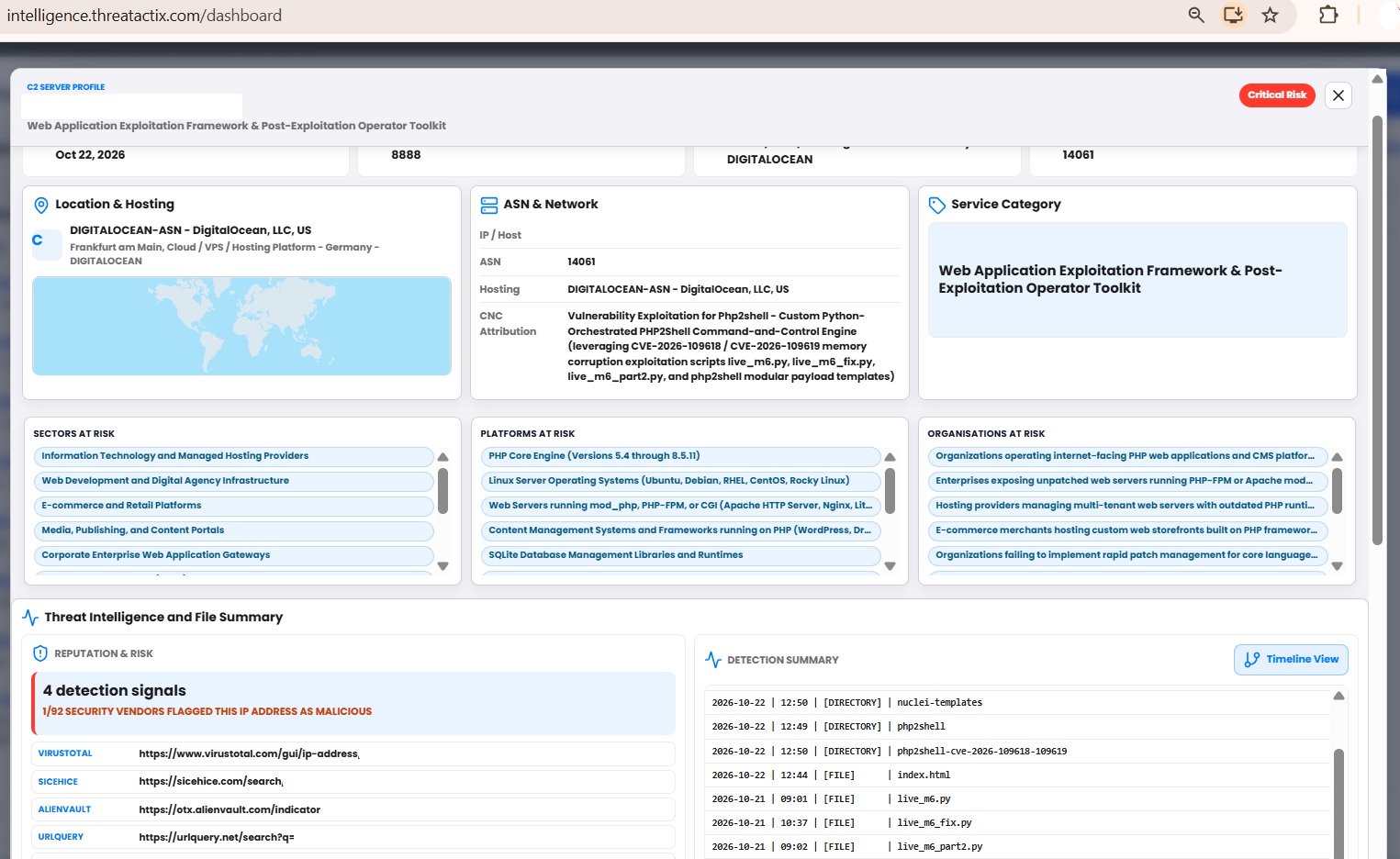
Campaign profile: Open Profile 08 — Python-Orchestrated C2
Hunting priorities